 Business · Management · Systems
Information Systems & Process Improvement · Last updated: 11 November 2026
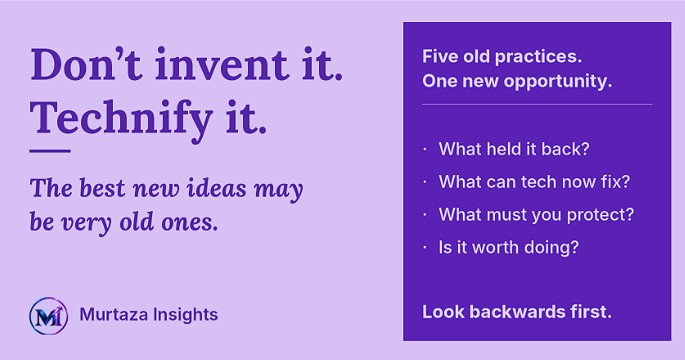
Don’t Invent It. Technify It.
Why your next AI opportunity may be hiding in a very old business practice
In this article
A market trader may quote a visitor a different price from a regular customer. An online retailer can use browsing history, previous purchases or location to estimate what each shopper will pay. A retailer can do this across thousands of transactions without shoppers seeing how their prices were set.
In August 2026, the US Federal Trade Commission invited public comment on a proposed enforcement policy statement about personalised pricing: using personal data to estimate what an individual might pay. It focused on potentially unfair or deceptive practices, particularly inadequate disclosure. It was not a blanket ban. The consultation closed on 25 September 2026; the statement remained a proposal as of 10 November 2026.
Where an established business can start
An experienced sales manager at a distributor may know which customers pay promptly, what margin an order can support and what the company quoted last time. The sales team can see past quotes, payment history and margins when preparing a quote. The manager can spend more time on orders that call for an exception.
M-PESA illustrates what technology can do for a familiar service. It began as a pilot involving microfinance repayments. Person-to-person transfers helped turn it into a widely used mobile-money service by making it easier to send money over a distance.
Five old practices and what held them back
Haggling
A buyer can negotiate with only so many suppliers at once. Nibble offers AI-supported procurement tools that can handle routine exchanges with several suppliers in parallel, within limits set by the business. The buyer sets which terms the software can accept and when to refer a negotiation to a person.
The neighbourhood shopkeeper
A shopkeeper remembers what regular customers buy, which brands they prefer and who pays on time. That knowledge is hard to share across a team or several outlets. A customer relationship management system can make purchase and contact history available to staff, so a customer can receive informed service when their usual contact is away.
The buying club
One hundred households ordering ten litres of cooking oil each can approach suppliers with an order for a thousand litres. The work is in collecting orders and payments, confirming quantities and distributing the goods. A shared ordering system can combine orders and track payments. Delivery costs and unreliable supply can erode the savings from buying in bulk.
Barter
A direct swap requires each person to want what the other has. A matching tool can find a three-way exchange: I want what Amina has, Amina wants what Peter has, and Peter wants what I have. The match is only useful if everyone accepts the proposed exchange and delivers their item.
Pawnbroker valuation
A pawnbroker uses experience to identify an item, assess its condition and estimate what it might sell for. An image-assisted appraisal can combine the model and visible wear with recent market information and the business’s valuation rules. Authenticity, ownership and suitability as security require separate checks before lending.
| Old practice | Old constraint | Technology-enabled possibility | What to protect |
|---|---|---|---|
| Haggling | One negotiation at a time | Rule-bound automated negotiation | Fairness and transparency |
| Shopkeeper’s memory | Limited to one person | CRM and customer information | Relationships and privacy |
| Buying club | Manual coordination | Digital order aggregation | Reliable suppliers and fulfilment |
| Barter | Hard to match participants | Multi-party matching | Trust and valuation |
| Pawnbroker valuation | Experience and time | Image-assisted initial appraisal | Authenticity and ownership |
- Old practice
- Haggling
- Old constraint
- One negotiation at a time
- Technology-enabled possibility
- Rule-bound automated negotiation
- What to protect
- Fairness and transparency
- Old practice
- Shopkeeper’s memory
- Old constraint
- Limited to one person
- Technology-enabled possibility
- CRM and customer information
- What to protect
- Relationships and privacy
- Old practice
- Buying club
- Old constraint
- Manual coordination
- Technology-enabled possibility
- Digital order aggregation
- What to protect
- Reliable suppliers and fulfilment
- Old practice
- Barter
- Old constraint
- Hard to match participants
- Technology-enabled possibility
- Multi-party matching
- What to protect
- Trust and valuation
- Old practice
- Pawnbroker valuation
- Old constraint
- Experience and time
- Technology-enabled possibility
- Image-assisted initial appraisal
- What to protect
- Authenticity and ownership
What has become easier to test
A business can connect an application to an existing AI model through an application programming interface (API). The application sends information to the model and uses the result. For example, OpenAI offers these services with usage-based charges. Some models can also analyse images.
AI coding tools can help build a prototype by generating, reviewing and debugging code. A prototype can show whether an idea merits further work. A production system still needs integration, testing, security, privacy controls and ongoing support. Include those costs when comparing the proposal with the existing process.
What the business could lose
Customers know when they are bargaining with a trader. They may have no idea that software has used their browsing history to decide what price to show them. For example, if a retailer sends customers’ purchase histories to an outside pricing provider, customers may be unaware that another company is using those records to help set their prices.
Processes using personal data need legal and privacy safeguards. Kenya’s Data Protection Act requires lawful processing and, under section 35, provides protections for people affected by decisions based solely on automated processing that have legal effects or significantly affect the person, subject to statutory exceptions and safeguards. Credit assessment and lending may bring additional duties. Businesses processing UK personal data may also need to consider the UK GDPR where it applies; consent is not the only possible lawful basis.
Six questions before you technify
- Does the process happen often enough for improvement to matter?
- What does it cost today in staff time, errors, delays or lost orders?
- Are the records and decision rules reliable enough to use?
- What errors or changes could damage customer trust or create privacy or compliance problems?
- Would the expected benefit cover implementation and ongoing costs?
- Who will use the new process, and what do they know about where the current one breaks down?
If two employees each spend three hours a day preparing quotations, cutting preparation time by a third would free two staff-hours a day. Test the change on one class of orders and compare preparation time, quote accuracy and the exceptions staff still have to resolve. The value depends on how the team uses the time saved and what the system costs to run.
Could one of your old processes be a new opportunity?
I can help you design a trial for an existing process and assess whether the results justify further investment.
Sources and further reading
- US Federal Trade Commission, proposed personalised-pricing statement, 19 August 2026
- deadline extension to 25 September 2026
- Nibble, official information on AI negotiation in procurement
- UK Information Commissioner’s Office, “A guide to lawful basis” (updated 2 April 2026).
- Kenya Data Protection Act, 2019, particularly section 35
- Safaricom, “How M-PESA Was Created,” 28 February 2025.
- FinDev Gateway, The Safaricom M-Pesa Pilot Test
- OpenAI API: pricing
- images and vision
- code generation
© 2026 Murtaza Insights
More from Information Systems & Process Improvement
Information Systems & Process Improvement · Last updated: 11 November 2026
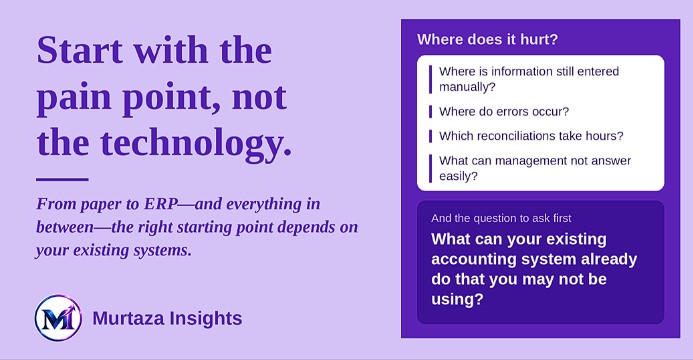
From Paper to ERP—and Everything in Between: Where Can AI Help?
From handwritten records to full ERP, examine where AI can reduce manual work, improve controls and help management get more useful answers from existing information.
Read ArticleMore Insights
Business Performance Reviews · Published: 11 November 2026
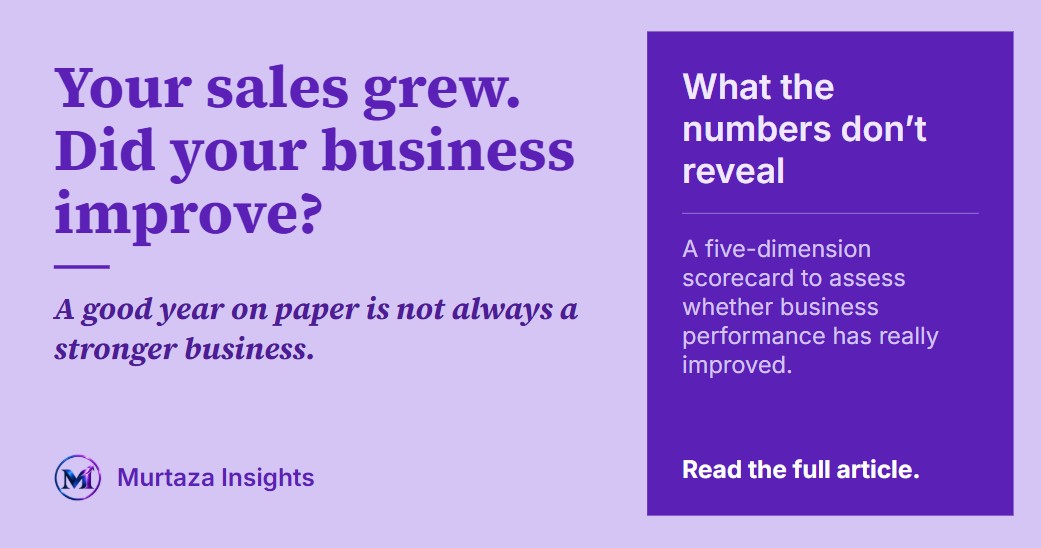
Your Sales Grew. But Did Your Business Actually Improve?
What Tesco, Sainsbury's and two Kenyan companies reveal about measuring genuine business improvement—and turning annual reviews into effective action plans.
Read Article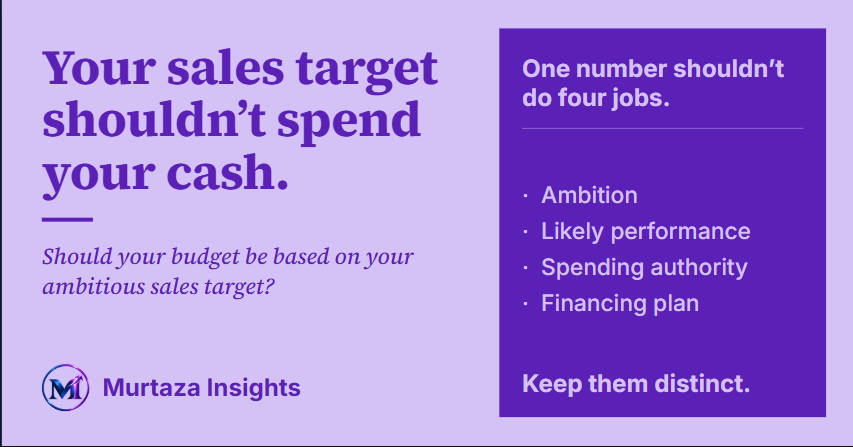
Business Analysis & Strategy · Last updated: 13 November 2026
Should Your Budget Be Based on Your Ambitious Sales Target?
Keep ambitious sales targets without automatically committing the spending needed to achieve them.
Read Article