 Business · Management · Systems
Biz Buzz
Biz Buzz
The unusual, surprising and occasionally amusing side of business & life.
Serious decisions do not always require a serious expression. Here are a few cartoons and observations about markets, technology, executive life and the endlessly humbling game of golf.






Archive
All Biz Buzz
Tap an item to open it in the slideshow above.
Quickmart IPO: My Mixed Emotions
When MPs questioned Quickmart’s IPO and called for a special audit, I briefly wondered whether my earlier reservations were justified. “I told you so!”
Then the share price rose above the KSh7.50 IPO price. My confidence wavered. “Did I get it wrong?”
Of course, neither development proves anything about my original valuation. Parliamentary concerns are not findings of wrongdoing, and a higher market price doesn't necessarily mean I was wrong.
My investment conclusion remains unchanged. I've added brief updates covering both developments to the original article.
What an Annual Report Can Reveal
An annual report can show higher sales, improved profits and stronger cash flow. All are encouraging. But profits may include valuation gains, cash flow may benefit from working-capital movements, and returns on capital may still be disappointing.
The results of Tesco, Sainsbury's, Kakuzi and Sasini illustrate why headline figures rarely tell the whole story. Our five-dimension Business Improvement Scorecard examines earnings quality, capital productivity, cash generation, competitive strength and future capability, including what published accounts cannot establish.
For owners and CEOs, the real value of an annual review lies in the decisions it changes before the next business plan.
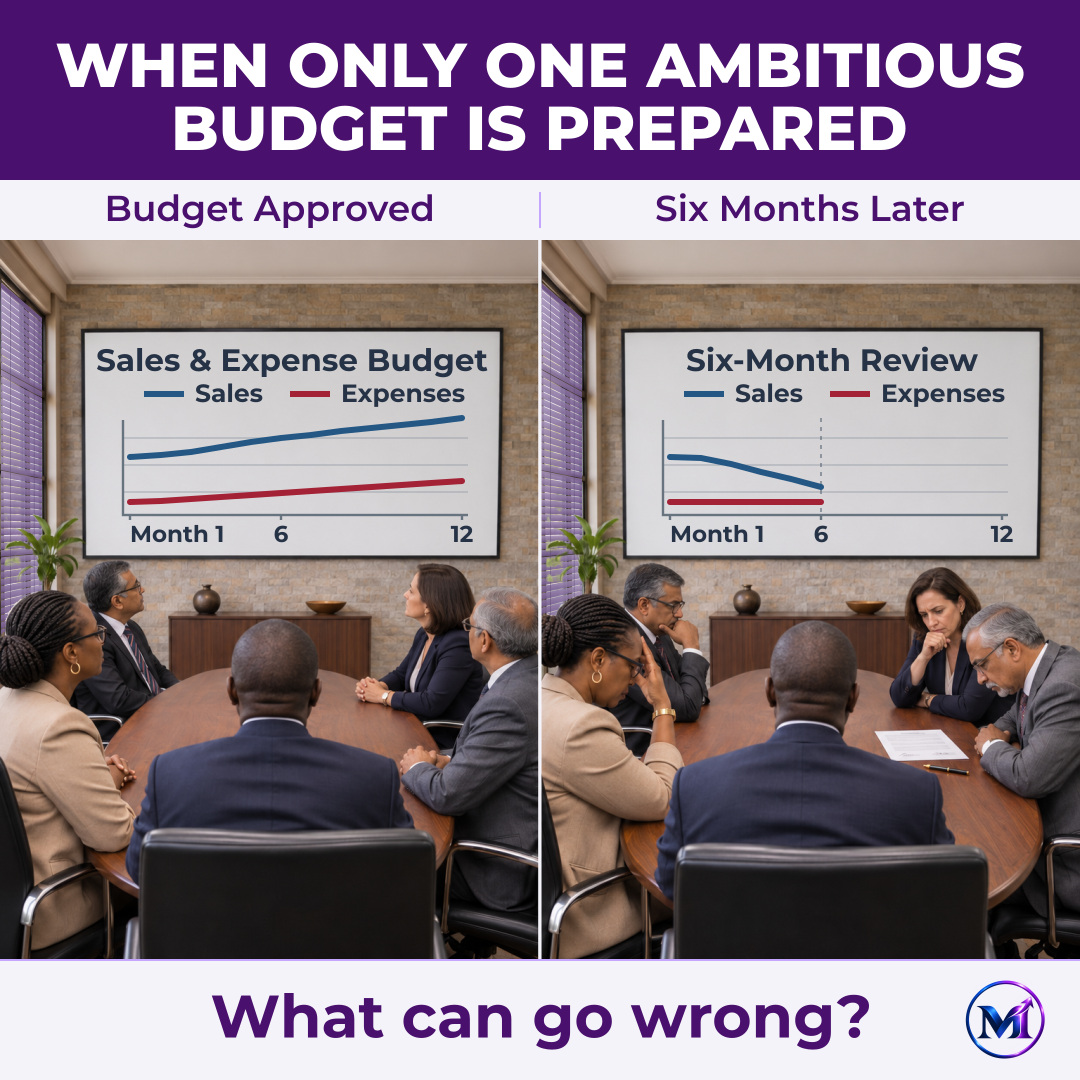
Should a Sales Target Be Your Budget?
Not always. One option pairs a realistic Base Budget with a separately approved Growth Programme. Another uses two complete budgets: Base and Target.
When one ambitious budget drives spending, a sales shortfall can leave costs committed before the revenue arrives. The problem isn’t ambition; it’s treating a sales target as automatic spending authority. Some costs must come early; others can be staged.
In my article I compare both approaches for boards and senior executives of mid-sized businesses, using an illustrative KSh example covering profitability, expenditure controls and liquidity.
KRA's Pre-Filled Returns: Are You Ready?
KRA preparing your tax return sounds convenient. But will it make life easier?
The upside: Less paperwork, fewer manual errors and potentially faster filing.
The downside: KRA's information may not capture every legitimate expense, allowance or adjustment. Differences with your own records could mean more reconciliation work.
For businesses, the real test is whether their records are accurate, complete and readily accessible.
Good systems make verification easier. Fragmented records, disconnected spreadsheets and weak controls can turn convenience into another headache.
The bigger question: Are your business systems ready for increasingly automated tax administration?
Explore how AI can improve the way businesses manage information — starting with what they already have.
PAPSS: A Shortcut for African Payments
Cross-border supplier payments in Africa often pass through international banks and dollar or euro conversions. PAPSS offers a more direct route between African currencies, potentially cutting cost and delay.
PAPSS targets processing within 120 seconds, though actual times vary. For example, a Kenyan business can pay a Nigerian supplier through participating banks without the traditional dollar detour. Savings depend on fees and exchange rates.
Trading across Africa? Ask your bank about PAPSS. Check participating banks and countries.
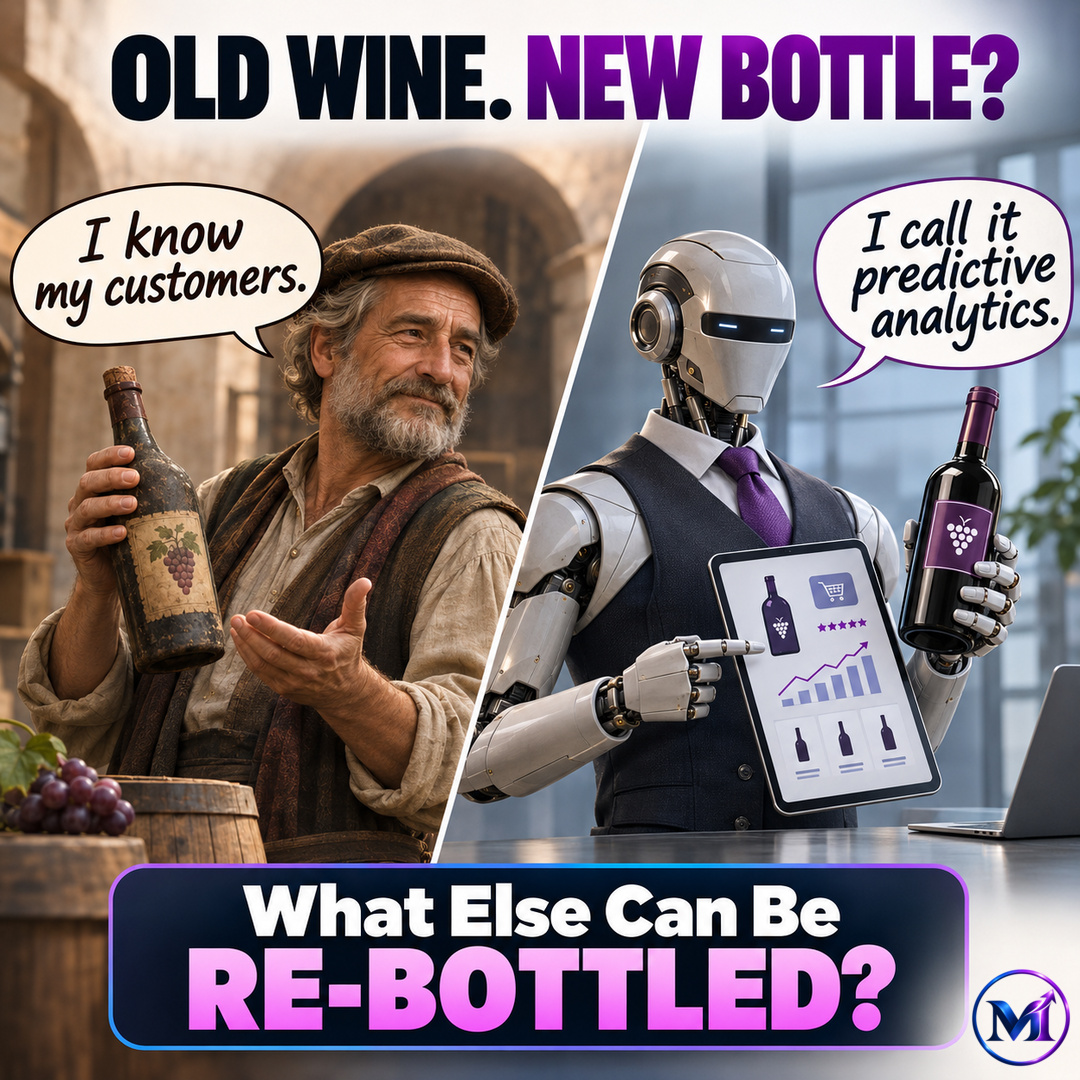
Old Business Ideas, New Technology
The traditional wine merchant knew his customers. Today's AI-powered systems can analyse purchasing patterns across thousands of customers. The underlying commercial thinking is familiar; what changes is the scale.
The same principle extends well beyond customer analytics. Negotiation, buying clubs, barter and other long-established business practices are finding new possibilities through software and AI.
For business owners, the opportunity may be hiding in a familiar process that once depended on individual memory, manual coordination or considerable time.
What becomes commercially possible when technology removes those limitations?
Our article, Don't Invent It. Technify It., explores the possibilities.
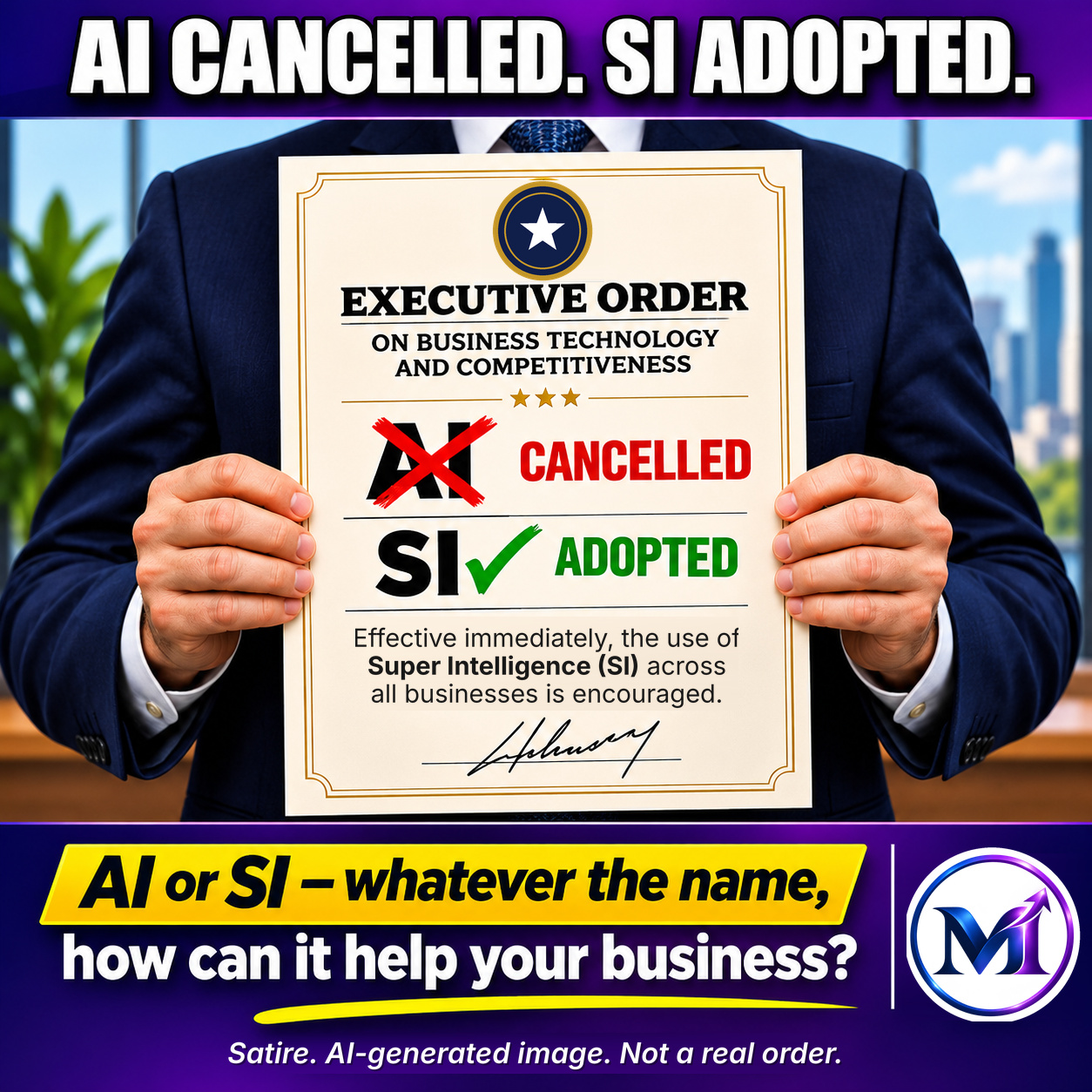
AI in Finance: What Works at Each Stage?
A fictional “AI cancelled, SI adopted” executive order is satire. The serious question is whether AI will improve your finance function or just add another system to manage.
Start with the pain point, not the technology. Unmatched invoices, missing records and unexplained variances are good places to look. Some can already be solved by your accounting software or conventional automation, so buying AI first may only add cost and complexity.
From paper to ERP, the right starting point depends on your existing systems. Which improvements justify new tools, and which simply need better processes?
How Lexus Turned Distortion into Publicity
Lexus commissioned Brooklyn-based art collective MSCHF to transform two electrified vehicles into extraordinary sculptures for its September 2026 Motomorphosis exhibition in New York.
Why? By displaying the distorted sculptures alongside the original production vehicles, Lexus demonstrated imagination and artistic possibility beyond conventional automotive engineering.
The business insight: Not every marketing investment needs to generate immediate sales. Memorable experiences can strengthen brand recall, distinctiveness and long-term consumer preference. In crowded markets, brands that stand out and stay in people's minds gain an advantage when purchasing decisions are eventually made.
Spend Fell 3%. Profit Rose 16%.
At Simbisa Kenya, customers spent 3% less on average in FY2026. Yet customer volumes rose 14% and operating profit 16%.
The business insight: A lower sale value can produce more profit, but only if the extra customers add more contribution than the margin given up, and can be served economically.
The question: Before cutting a price, do you know how much extra volume you need? On an illustrative 30% margin, a 3% cut needs about 11% more volume.
Why did profit grow faster than revenue? The article shows what to check before you try it.
Canada's Tariffs: Political Pressure Points
Canada’s September 2026 retaliatory tariffs targeted US products from dairy to steel. Canada’s industry minister said products were selected to put political pressure on particular states.
The business insight: effective negotiation is not always about the size of your response. Knowing what matters most to the other side can give greater leverage, though targeted pressure carries costs and risks.
The question: in your next major supplier or customer negotiation, do you know what the other side values most?
Bright Profits. Dim Customer Experience.
Kenya Power reported nearly KSh25 billion in after-tax profit for 2025/26. Yet EPRA's figures show customers experienced an average of 3.91 power interruptions per month, up from 3.67 the previous year.
The business insight: A healthier bottom line does not automatically mean better service. Boards should ask whether financial gains are accompanied by improvements customers can experience — greater reliability, billing accuracy and faster complaint resolution.
The question for any business: Does your monthly management pack give customer experience the same attention as profitability?
Smaller Waistlines. Bigger Opportunities?
Wall Street sees a potential opportunity for Victoria's Secret as users of GLP-1 weight-loss drugs replace their wardrobes. But the company's CEO said in June 2026 that these drugs had so far made little difference to sales.
The business insight: A plausible growth story can attract investors before the expected sales materialise. Smaller clothing sizes do not necessarily mean greater spending, and replacing a wardrobe may be a one-off purchase rather than sustained demand.
The bigger question: When markets anticipate a new growth opportunity, how much is supported by evidence — and how much remains an attractive assumption?
Pulse Ring: Can Less Technology Sell?
The Pulse Ring takes an unusual approach to wearables. Priced from US$229, according to the company, it measures no heart rate, sleep or steps. Instead, it vibrates gently to remind its wearer to pause, breathe and refocus.
Competing smart rings offer ever more sophisticated tracking; Pulse sells freedom from constant measurement.
The business question: in crowded markets, can simplicity itself become a selling point, even command a premium? Pulse suggests that doing less can sometimes create more value, though a single product proves little about wider demand.
She Did It in One. I’m Still Trying.
My wife has already achieved golf’s ultimate prize, a hole-in-one. I remain in pursuit, encouraged that every additional round gives me another chance. Semi-retirement, fortunately, leaves time for extensive fieldwork.
When the Scorecard Changes
On the golf course, a second stroke cannot turn a missed first attempt into a hole-in-one. In business, however, a missed target can be presented as success by highlighting a different measure.
The business insight: Additional measures can add context, but they should not distract from an unmet target. Management should explain the shortfall and any achievements elsewhere.
Good reporting distinguishes between meeting the agreed scorecard and changing it after the result.
A Win-Win for Mbappé and On?
Kylian Mbappé’s move from Nike to Swiss sportswear brand On involves more than a new endorsement. According to Reuters, the agreement combines cash and an equity component, although its size and conditions have not been disclosed.
On’s entry into football involves Mbappé contributing to product development, with Thierry Henry as Director of Football. The company's first football boots are planned for 2027.
For business leaders and managers: Strategic partnerships should deliver measurable commercial value, not just publicity. Equity can help align long-term interests.
For athletes and sports personalities: Equity offers an opportunity to share in the value they help create, beyond endorsement fees — but also brings exposure to business risks.
© 2026 Murtaza Insights
Copyright & Sharing Policy